
Emergency
Burst or Frozen Pipe? What to Do Before the Plumber Arrives
By Hydrosphere PlumbersJanuary 8, 2026 6 min read
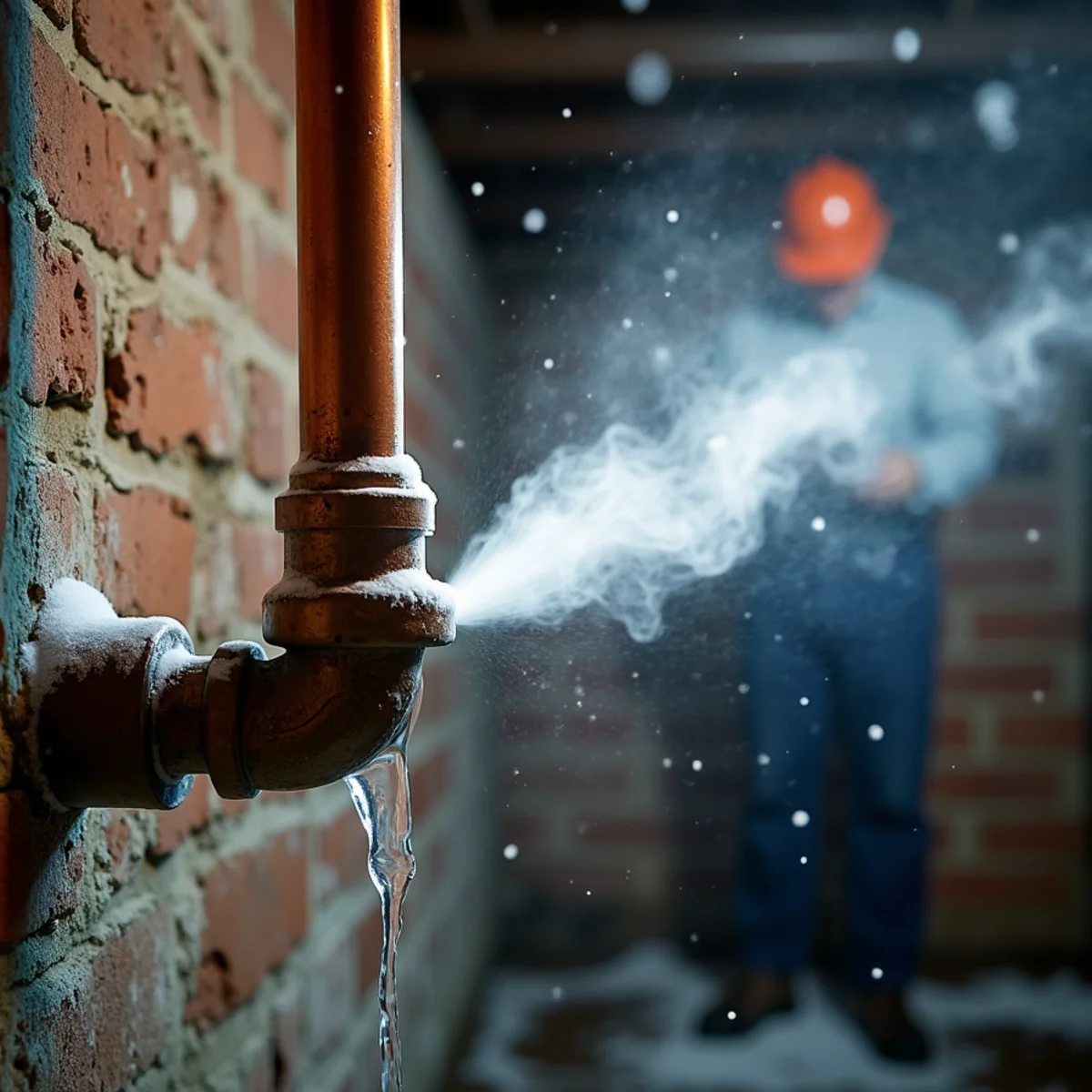
When a pipe bursts, shut off the main water valve immediately if you can reach it safely, move valuables and people away from the water, keep clear of any wet electrical equipment, and call a plumber. Photograph the source and damage when it is safe. For a frozen pipe that has not burst yet, shut off the water, open a nearby faucet and thaw it gently — never with an open flame.
A burst pipe is one of the few home emergencies where the first five minutes genuinely change the outcome. In a Westfield winter, a pipe in an exposed run or an unheated space can freeze overnight and split, then start spraying the moment the ice thaws. Knowing where your main shut-off is — and getting to it fast — is the difference between a mopped-up floor and water in the walls.
Step 1: Shut off the main water valve
Your first move is to stop the water. In most older Westfield homes the main shut-off is in the basement, on the wall facing the street, near where the water service line enters and close to the meter. Turn it fully off — clockwise on a round handle, or a quarter-turn on a lever valve. If the burst is at a single fixture, the local shut-off under the sink or behind the toilet may be enough, but when in doubt, kill the main.
If your main shut-off is stuck, leaks when you touch it, or you cannot find it during the emergency, call us and we will talk you through it. After the emergency, have an old multi-turn valve replaced with a quarter-turn valve so it actually works next time.
Step 2: Stay clear of electrical hazards
Water and electricity are the real danger, not the pipe. Do not touch electrical outlets, appliances, panels or wiring in a wet area, and do not walk into standing water that may be in contact with electrical equipment. If water is near your electrical panel or you are unsure, stay out of the area and get an electrician or the utility involved before cleanup.
Step 3: Protect what you can, safely
- Move furniture, electronics, rugs and documents away from the water path
- Lift or move anything valuable off a wet floor if it is safe to reach
- Contain accessible drips with buckets and towels — do not open a wall or ceiling yourself
- Turn off the water heater’s supply if it is the source and it is safe to reach
Step 4: Document the damage for your insurer
Before cleanup, photograph the source of the leak, the shut-off valve, the affected rooms and any damaged belongings, along with model or serial numbers on appliances involved. This record supports a homeowners insurance claim. Ask your insurer before discarding damaged materials, and keep the plumber’s written diagnosis and invoice with your claim file. Begin drying wet materials within the EPA’s 24- to 48-hour window to limit mold growth, once the area is safe.
Frozen but not burst yet? Thaw it carefully
If you have a frozen pipe that has not split — no water when you open a tap, a frosted or bulging section — you have a chance to prevent the burst. Shut off the water to that line, open the nearest faucet so melting water and steam can escape, and warm the pipe gently with a hair dryer, a heat lamp or towels soaked in warm water, working from the faucet end back toward the frozen spot. Never use an open flame, a blowtorch or a propane heater on a pipe — it is a fire risk and can burst the pipe from steam pressure.
If you cannot reach the frozen section, or the pipe has already burst, that is a call for an emergency plumber. The same goes if you smell gas at any point — leave the house and call your gas utility or 911 from outside first.
Preventing the next freeze
Once the emergency is handled, the lasting fix is preventing a repeat. In Westfield and hillside towns like Mountainside, freezes hit the same spots: exposed runs in crawlspaces and garages, pipes in exterior walls, and outdoor hose bibs. Insulate those runs, seal the drafts that let cold reach them, replace a failed hose bib with a frost-free sillcock, and keep the heat on and a cabinet door open under vulnerable sinks during a hard freeze. Our winter checklist covers the full routine.
When to call
Call an emergency plumber right away for any burst pipe with active water, a frozen pipe you cannot safely thaw, or water near electrical equipment. Hydrosphere Plumbers answers 24/7 at (858) 363-8298. We will give you safe interim steps while a licensed plumber is on the way, then repair the failure and show you where the next freeze is likely if nothing changes.