
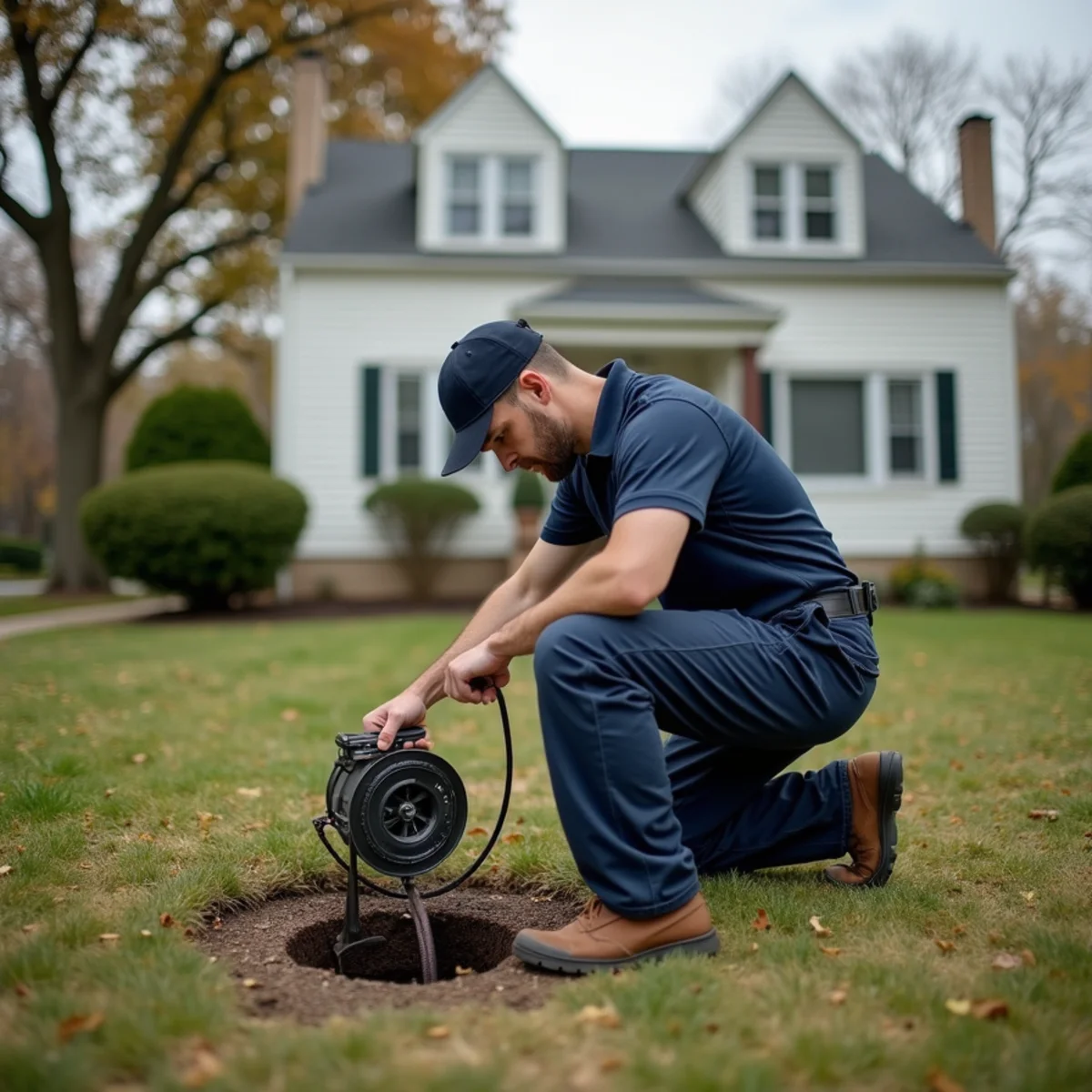
Sewer line repair in Westfield starts with a camera, not a shovel. We inspect the lateral to see whether the problem is roots, buildup, a cracked joint, a low spot or a collapse — then match the repair to what the pipe actually needs, from a spot fix to trenchless lining to full replacement.
This is the highest-ticket work on the site and the one where a wrong diagnosis is most expensive. About 63% of Westfield homes pre-date 1960 and sit under mature street trees, so clay and cast iron laterals near the end of their life are common. The camera keeps you from paying for the wrong fix.
Warning signs of a sewer line problem
A sewer line problem rarely announces itself as one. It shows up as several fixtures slow at once, a gurgle in a tub when the toilet flushes, a recurring main-line clog, or a backup at the lowest drain in the house during heavy use or heavy rain.
- Multiple fixtures backing up or draining slowly together
- A gurgle from a tub or floor drain when a toilet flushes
- A main-line clog that keeps returning after snaking
- Sewage odor in the basement or yard
- Patches of unusually green or sunken lawn over the lateral
Sewer camera inspection: what it shows
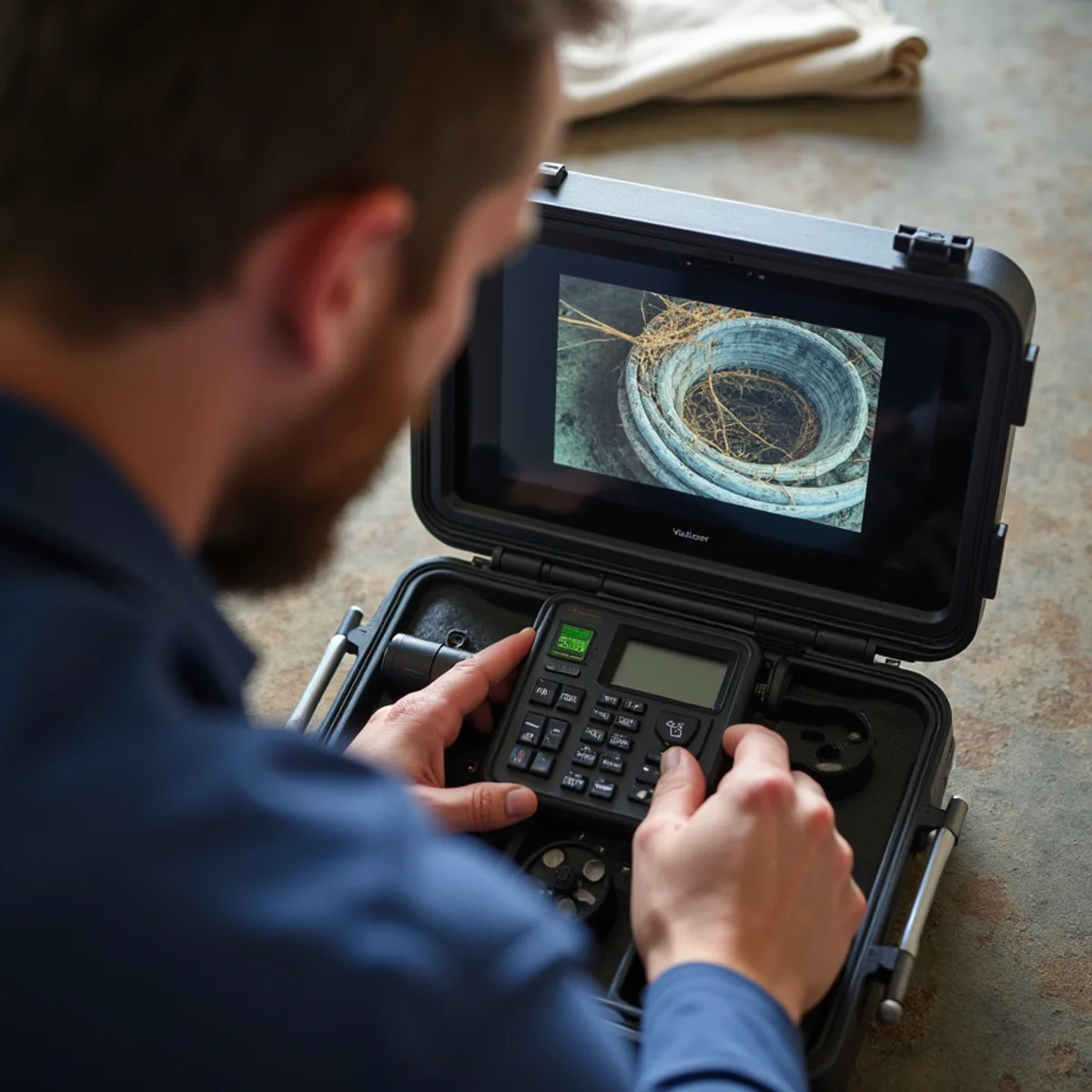
A camera run from the cleanout shows the inside of the line in real time. It distinguishes soft buildup from root mass, and both from a cracked joint, an offset, a belly (a low spot that holds water and waste) or a collapsed section. It also marks the approximate location and depth of the defect, which is what makes a targeted repair possible instead of digging the whole yard.
Clay and cast iron laterals under pre-1960 Westfield homes
Homes built before about 1960 in Westfield typically have a clay or cast iron sewer lateral. Clay comes in short sections with joints every few feet — perfect entry points for roots — and becomes brittle with age. Cast iron scales internally and can rot from the bottom. Knowing the material tells us how the pipe is likely failing before we even run the camera, and it shapes whether lining or replacement is the better long-term answer.
Tree roots, offset joints and bellied lines
Roots follow moisture into any opening in the pipe — a loose joint, a hairline crack — then grow into a mat that catches waste and causes the recurring backup. Offset joints and bellies are structural: the pipe has shifted or sagged, and no amount of cleaning fixes the shape. The camera tells us which of these you have, because roots may be cut and maintained while a belly or collapse has to be repaired.
Repair options: spot repair, pipe lining, pipe bursting, full replacement
We match the repair to the defect and the access, and we explain the trade-offs before you approve anything.
- Spot repair — excavate and replace a single failed section when the rest of the line is sound
- Pipe lining (trenchless) — a new pipe cured inside the old one, with minimal digging, when the host pipe allows
- Pipe bursting (trenchless) — pull a new pipe through the old path when lining is not suitable
- Full replacement — when the lateral is collapsed or failed end to end
Sewer backups in basements during heavy rain, and backwater valves
Westfield sits in the Rahway River basin, and heavy rain — Hurricane Ida in September 2021 is the memory here — can overwhelm sewers and push water back toward the lowest drains in a basement. A backwater valve installed on the lateral is a check valve that lets waste out but stops the sewer from flowing back in. For homes that have backed up before, it is often the single best protection against a repeat.
Your lateral vs the town main: who is responsible
In general, the sewer lateral — the pipe from your house to the connection at the town main — is the homeowner’s responsibility, and the main in the street is the town’s. When a backup or defect is in your lateral, it is on you to repair; when it is in the main, it is the town’s. A camera inspection helps establish where the problem is, which matters before anyone starts digging.
What affects sewer line cost
Sewer cost is driven by the length affected, the depth, the repair method, and restoration of anything dug up — lawn, walkway or driveway. As planning references only — not quotes — a researched spot sewer repair runs about $1,000 to $4,000 and a full sewer replacement about $3,780 to $15,120. The camera findings, access and restoration decide where a specific job lands, and your plumber prices it after the inspection.
What affects the price
We give you a price before work starts. These are the factors that move it — your plumber confirms the actual number on site.
- Length of line affected and its depth below grade
- Repair method: spot repair, lining, bursting or full replacement
- Access and what must be excavated and restored (lawn, walk, driveway)
- Whether a backwater valve is added for backup protection
- Permit and inspection requirements
- Whether the defect is in the lateral or at the town connection
Why choose Hydrosphere Plumbers for sewer line repair
Camera first, shovel second
We inspect the lateral before quoting a dig. The camera shows roots, a cracked joint, a belly or a collapse and marks where it is — so you pay for the fix the pipe needs, not the most expensive one.
The least-invasive fix the pipe allows
When the pipe permits, trenchless lining or bursting repairs it with small access points instead of trenching your lawn or driveway. We lay out spot repair, lining, bursting and full replacement with the trade-offs for each.
Backup protection for storm towns
For homes that back up in heavy rain — common near the Rahway River — a backwater valve stops the sewer from flowing back into the basement. We assess whether your lateral is a good candidate.
24/7, licensed and insured
A sewage backup is an emergency. A live person answers any hour at (858) 363-8298, and every plumber we send is licensed and insured in New Jersey.
Sewer Line Repair across Westfield and nearby Union County towns
We handle sewer line work across Westfield and the nearby Union County towns, where about 63% of homes pre-date 1960 and sit under mature street trees — so clay and cast iron laterals near the end of their life are common. From a root-blocked lateral in Fanwood’s historic core to a storm backup in a Springfield basement near the Rahway River, we camera the line first and match the repair to the pipe.
We cover Scotch Plains, Cranford, Clark, Springfield, Fanwood and Mountainside, plus Garwood — see all the areas we serve.